
14. Pew Rents

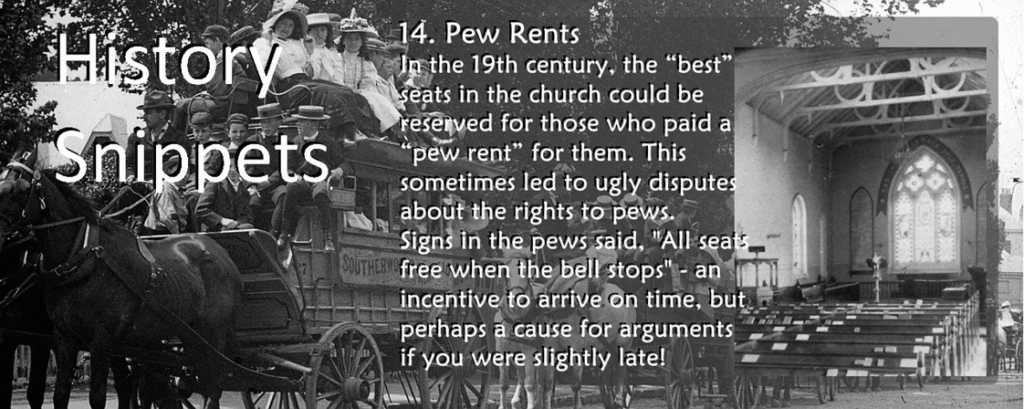
We all have our preferred places to sit in church – sometimes out of habit, sometimes because it seems warmer, or the sound is better. From the early days of St. John’s, “pew rents” were a normal part of the finances of the church, and especially once the colonial government stopped funding the church in the 1840s. The wealthy could afford the best seats, and conflicts arose from time to time about the allocation of seats, and even the use of those seats by others when the “owners” were absent. By late in the 19th century, signs on each pew, visible in the photo, read, “All seats free when the bell stops.” – Even though pews were rented by individuals and families, they evidently had to be in the church before the bell stopped ringing. Otherwise, anyone without a seat, such as visitors to the church, could occupy their allocated seat. Those without rented pews could still find a seat – further back, in the side aisles or upstairs in the old galleries. While there is still evidence of pew rents being paid as late as the 1930s, numbers were not painted in the carved pews of 1912 or the later 1938 pews. Nowadays, “first in” prevails, except for weddings, funerals and special events at which seats may be reserved. Artefacts: Pew number sign [click] “After bell” sign [click]