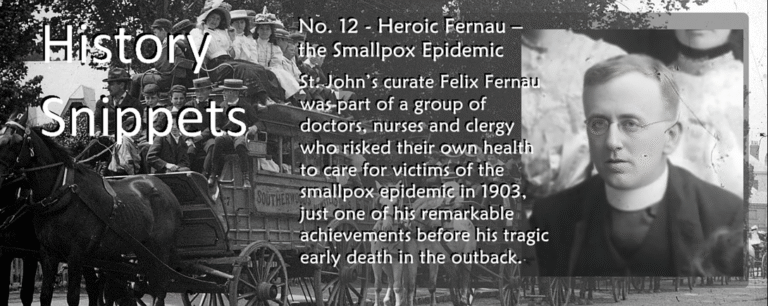
admin

admin

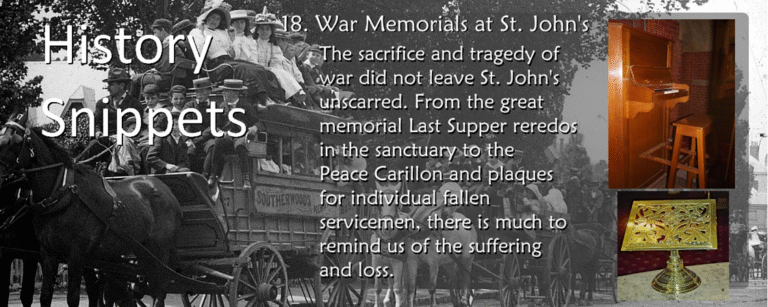
18. War Memorials at St. John’s

Inside nearly all the places of worship in Launceston and surrounding districts, there have been placed honour boards, plaques, windows and other memorials to commemorate those members of each congregation who fought and in many cases, gave their lives, in…

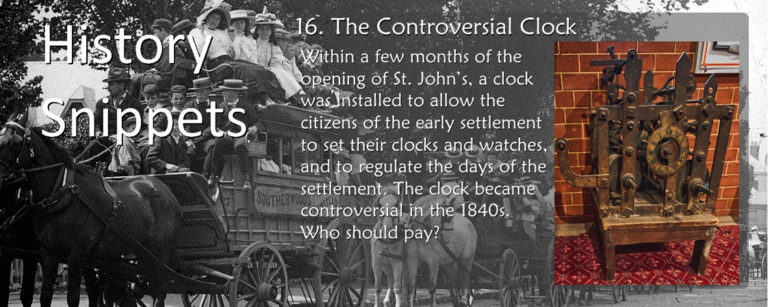
16. The Controversial Clock

By the 1820s, early Launceston was gradually changing from a settlement of tents and huts into a small town, and with the completion of St. John’s Church in 1825, an opportunity arose to install a town clock in its tower,…

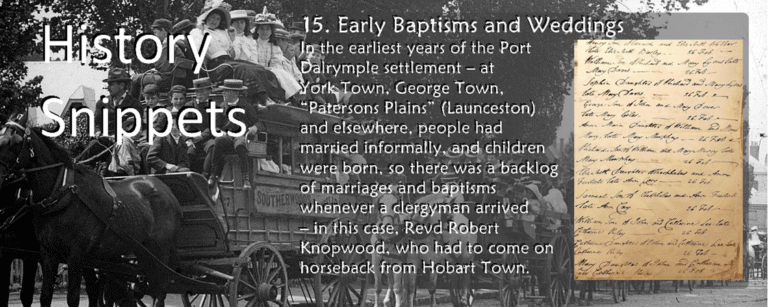
15. Early Baptisms and Weddings

Before St. John’s Church was built, and before the appointment of Revd John Youl as chaplain to the settlement, Christian ministry was haphazard and occasional. Revd Robert Knopwood was the only clergyman in Van Diemens Land from 1803, and rarely…

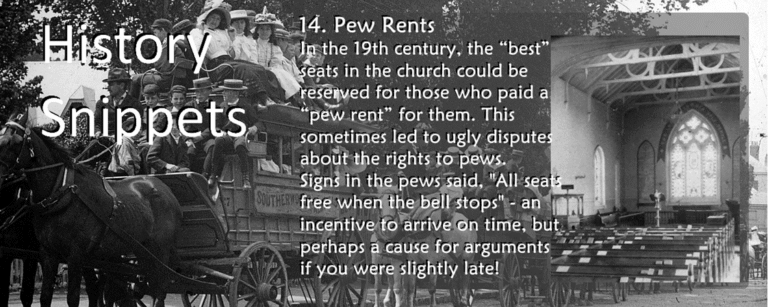
14. Pew Rents

We all have our preferred places to sit in church – sometimes out of habit, sometimes because it seems warmer, or the sound is better. From the early days of St. John’s, “pew rents” were a normal part of the…

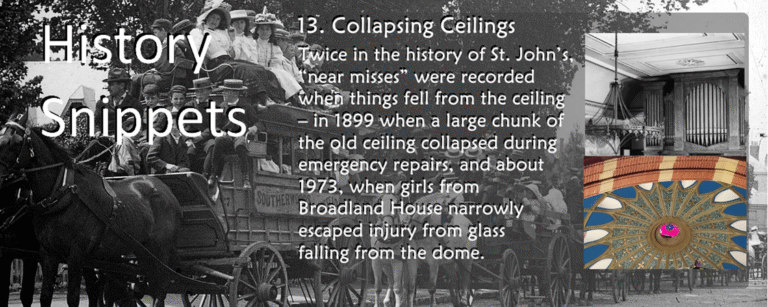
13. Collapsing Ceilings

In 1899, plans were well in hand for the building of “the great extension” of St. John’s – the present dome area, transepts, chapel, chancel and sanctuary. The nave rebuild was stage 2, and was eventually completed in 1938. But…

10. Burial Ground Controversy

By default, the majority of the population of colonial Launceston, convict and free, was considered “Church of England”, and the “Episcopalian Burial Ground” was consecrated in 1823 in what is now Cypress Street. An estimated 9000 people were buried there…

09. The hidden walls – 1938

While earlier plans for the extension of St. John’s proposed a lengthening of the building eastwards, and some felt a complete demolition was best, Alexander North’s 1893 plan included the vast dome area and transepts, the present chancel and sanctuary,…