admin

admin

10. Burial Ground Controversy
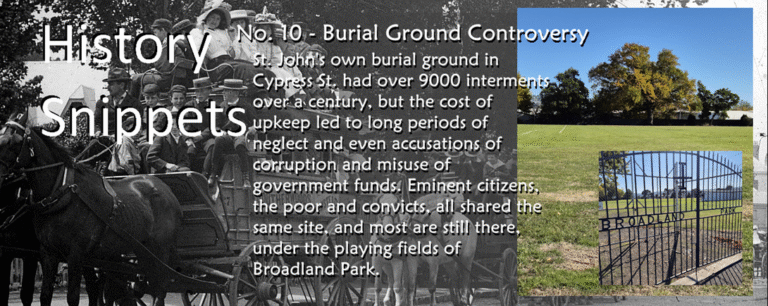
By default, the majority of the population of colonial Launceston, convict and free, was considered “Church of England”, and the “Episcopalian Burial Ground” was consecrated in 1823 in what is now Cypress Street. An estimated 9000 people were buried there…
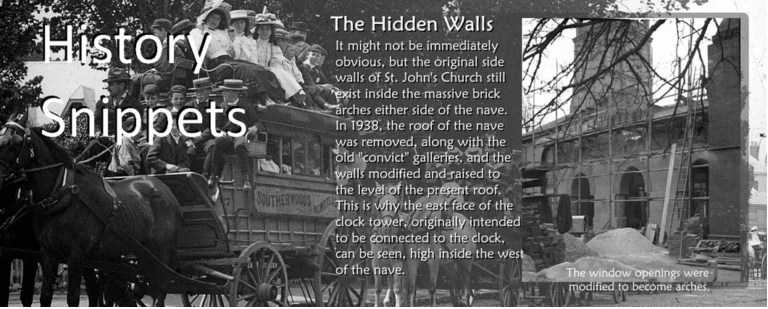
09. The hidden walls – 1938

While earlier plans for the extension of St. John’s proposed a lengthening of the building eastwards, and some felt a complete demolition was best, Alexander North’s 1893 plan included the vast dome area and transepts, the present chancel and sanctuary,…

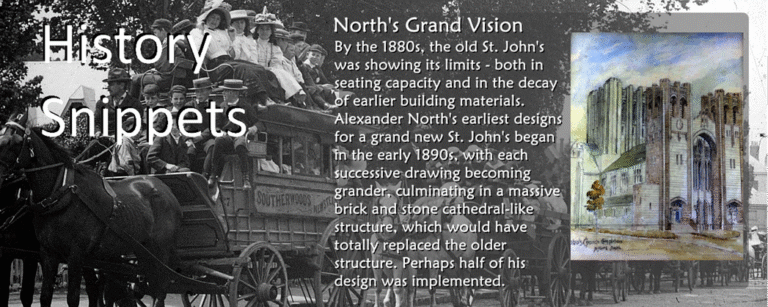
08. North’s Grand Vision

Even in the first decades of St. John’s Church, the size of the building was seen as inadequate for the growing town. A small eastern chancel, added in 1866, hardly improved the seating capacity, and by 1884, Leslie Corrie had…

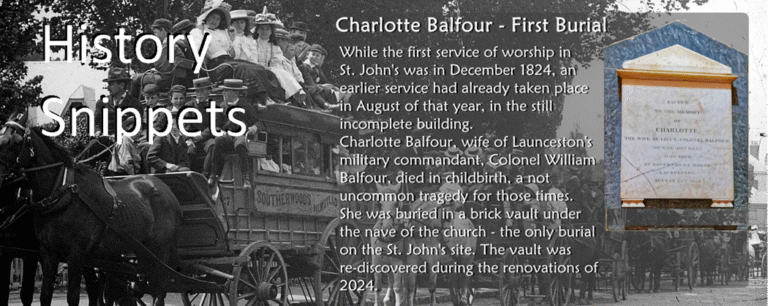
07. Charlotte Balfour – First Burial

Launceston residents will be familiar with Balfour Street, named after Lieutenant-Colonel William Balfour, who was appointed civil and military commandant of the Port Dalrymple settlement in 1825, and came to Launceston with his wife Charlotte and children in April that…

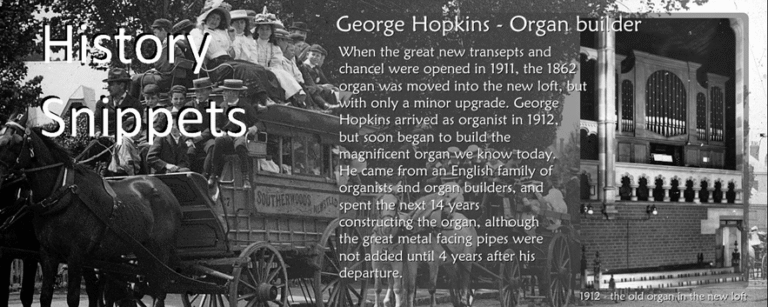
06. George Hopkins – Organ Builder

Born in 1872 in Rochester, England, to a family with strong musical traditions, organist and organ builder George Hopkins arrived at St. John’s in 1912, to find the 1862 organ, formerly in the west gallery of old St. John’s, had…

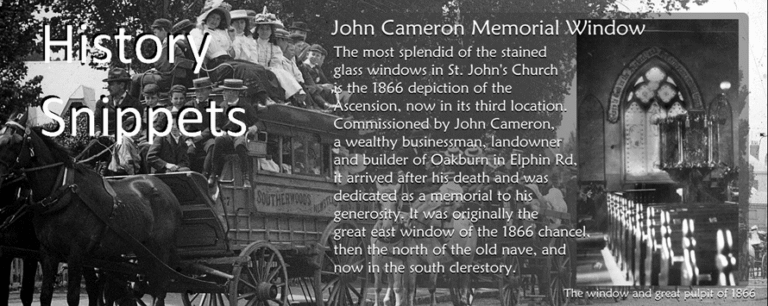
05. John Cameron Memorial Window

Arriving in Van Diemen’s Land in 1837, John Cameron was a successful businessman and landowner. He was a strong supporter of St. John’s Church, and commissioned Ferguson and Urie of Melbourne to create the beautiful Ascension window, likely Launceston’s most…

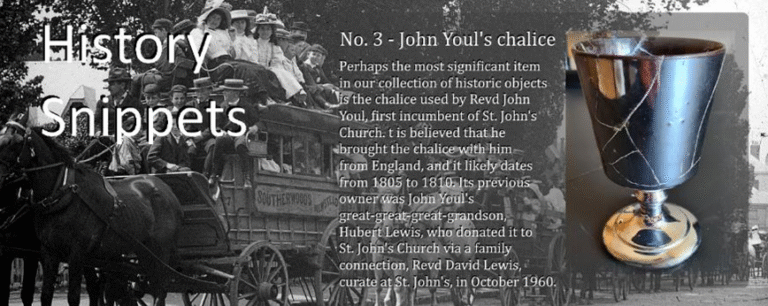
03. John Youl’s Chalice

John Youl arrived at George Town in 1819 as the first appointed chaplain for the young Port Dalrymple settlement, and St. John’s Church was built during his time, but died less than 2 years after its opening, and before it…