
17. Pulpits – All Shapes and Sizes!

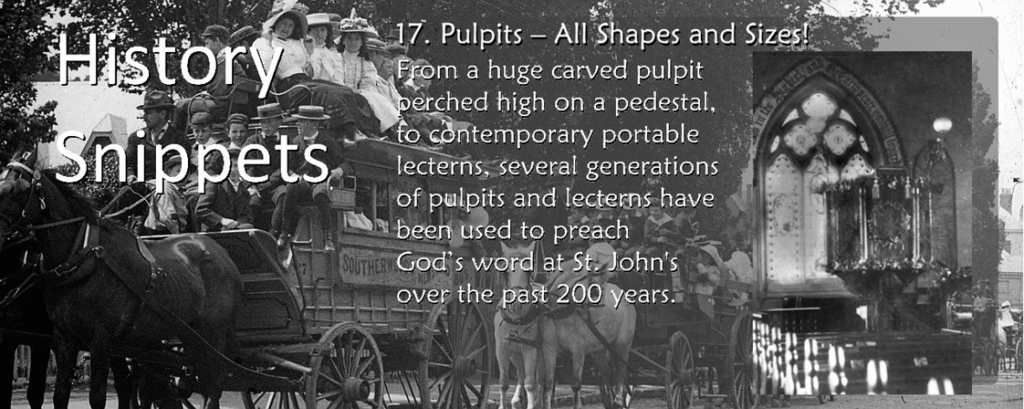
We don’t know for sure what kind of pulpit was used when St. John’s first opened in 1825. The earliest photo of the interior shows a very tall and beautifully carved pulpit on a pedestal, and it was moved from the centre to the left when the new chancel was built in the 1860s, so it may have been the original. Its size reflects both the “low church” emphasis on preaching rather than liturgy, and the need for the preacher to be high enough to engage those sitting in the side galleries which ran to the front of the nave. In 1888, after the departure of Canon Brownrigg, it was replaced by a much smaller one which continued in use, even in the new chancel opened in 1911, until the great stone Dry memorial pulpit was completed, likely in the early 1920s, but without a canopy until 1938. The smaller wooden pulpit was moved to St. Aidan’s, and is still in place there. The Dry pulpit, no doubt the location of the occasional “dry” sermon, remained in regular use until the turn of the 21st century, by which time the development of a contemporary service led to preaching from a portable lectern, firstly at the chancel steps, then on the dais built in 2003. In 2007, a contemporary wooden lectern, matching the moveable communion table still in use today, was donated as a memorial to late rector, Gregory Clifton. In the side chapel, preaching was normally done from a brass lectern, a memorial to Robert Parker who died in 1903, and of course, we have the brass eagle lectern, an 1890 memorial to Emma Oakden, which was used for many other addresses, including by former prime minister Gough Whitlam at the funeral of Lance Barnard in 1997.